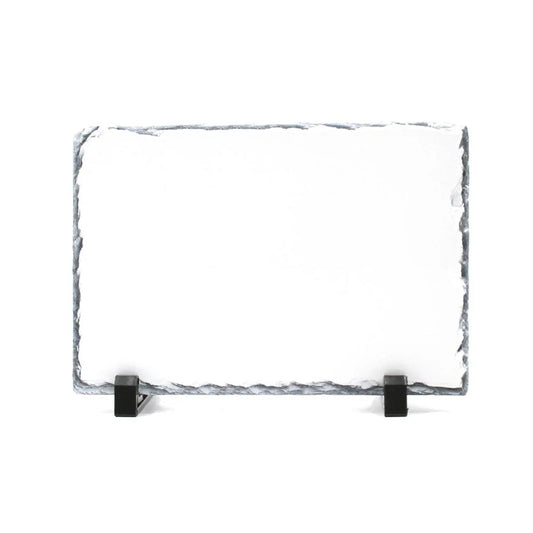

Transfer paper is a specially coated paper that carries a printed design from your printer onto another surface using heat, pressure or water. The right type depends on three things: the printer and ink you use, the material you are decorating, and the finish you want. If you are decorating polyester-coated blanks such as sublimation mugs, coasters and photo slates, you need sublimation paper used with sublimation ink. For cotton T-shirts or other uncoated items, an iron-on or other transfer type is usually the better fit.
The main types of transfer paper
Although they all look similar in the packet, transfer papers work in quite different ways. Here is how the common types compare.
Inkjet iron-on transfer paper
Designed for standard inkjet printers and ordinary ink. The design is printed onto a coated layer, which is then pressed onto fabric with an iron or heat press. The coating sits on top of the fabric, so you can usually feel it, and it can crack or fade with repeated washing. It comes in versions for light and dark fabrics, with the dark version using an opaque white backing. It suits cotton and cotton blends and is popular for one-off home projects.
Laser transfer paper
Made to handle the heat of laser printers and toner. Like iron-on paper, it generally leaves a layer on the surface of the item. Some laser papers are made for fabric and others for hard surfaces, so check what each one is designed for before buying.
Waterslide decal paper
Rather than heat, this paper releases a thin printed film when soaked in water, which you slide onto a smooth surface such as glass, ceramic or a model. It usually needs a sealant to protect it and is better suited to decorative items than to things that get heavy use or regular washing.
Sublimation paper
Sublimation paper is built for a completely different process. You print with sublimation ink in a dedicated or converted printer, then apply heat and pressure. The ink turns into a gas and bonds with polyester fibres or a polyester coating, becoming part of the surface rather than sitting on top of it. The paper's job is to hold the ink and then release as much of it as possible onto the blank, so you are left with a smooth finish you cannot feel.
Why sublimation paper suits polyester-coated blanks
Sublimation only works on polyester or on items with a special polymer coating. Ordinary ceramic or cotton will not take the ink properly, which is why sublimation blanks are coated specifically for the process. When the two are matched, the benefits are clear:
- No surface layer: the design becomes part of the coating, so there is no film to peel or crack.
- Vivid, photographic colour: sublimation handles gradients and photos well.
- Durability: because the ink is bonded into the coating, designs hold up well to normal use when the blank is good quality.
- Edge-to-edge prints: there is no visible border or outline around the design.
The trade-offs are worth knowing too. Sublimation works best on white or light-coloured surfaces, as the inks are transparent and there is no white ink. It needs a printer set up with sublimation ink, and it will not work on untreated cotton.
Which transfer paper do you need?
Use this quick guide to match the paper to your project:
- Cotton T-shirts at home with a normal inkjet: inkjet iron-on transfer paper.
- Hard surfaces or fabrics with a laser printer: laser transfer paper made for that material.
- Decorative glass or ceramic with no heat press: waterslide decal paper.
- Sublimation mugs, coasters, photo slates, polyester textiles and other coated blanks: sublimation paper with sublimation ink.
If you are building a small personalised gifts business, sublimation is a common choice because one printer and one paper type can cover a wide range of blanks.
Choosing sublimation transfer paper
Sheet size
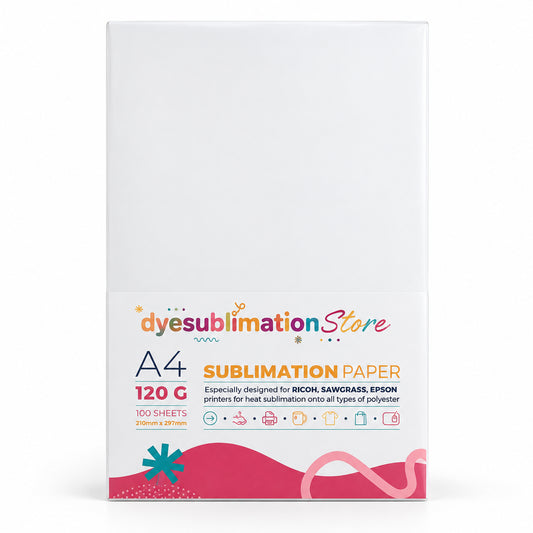
A4 sheets are the most versatile option, fitting most desktop printers and suiting coasters, slates, chopping boards, tote bags and cushion covers. Our Sublimation Paper 100 Sheets - A4 120G is a good all-round starting point.
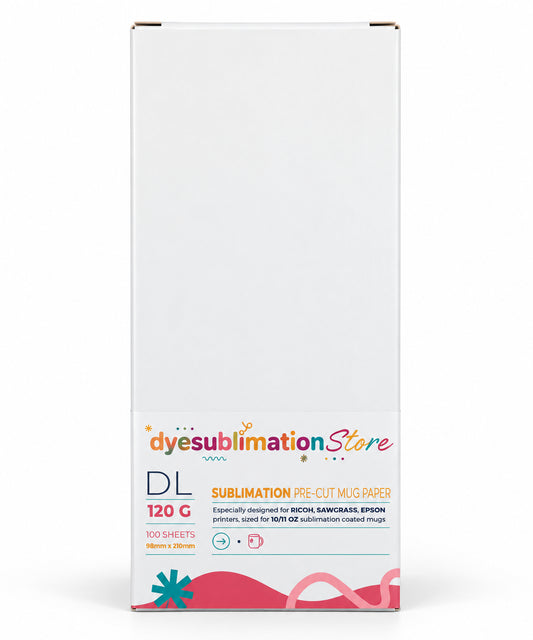
If you mainly print mugs, pre-cut mug paper saves time and waste because the sheets are already sized for a mug wrap, so there is no trimming. Take a look at our Sublimation Pre-Cut Mug Paper 99 x 210mm - 100 Sheets - 120gsm.
Paper weight
Paper weight, measured in gsm, affects how the sheet handles ink and heat. A mid-weight paper is a sensible choice for general use across mugs and flat items.
Tips for better results with sublimation paper
- Print a mirror image. The design is flipped when transferred, so mirror it in your print settings, especially when it includes text.
- Print on the correct side. Sublimation paper has a coated side; printing on the wrong side gives dull or patchy results.
- Secure the paper. Use heat-resistant tape so the sheet cannot shift during pressing, which causes ghosting. Our Sublimation Heat Tape - 10mm is made for this.
- Follow the blank's recommended time and temperature. Different items need different settings, so always check the guidance for the blank you are using.
- Test first. Try a design on a standard blank such as an 11oz White AAA Sublimation Mug before moving to more expensive or unusual items.
Common questions about transfer paper
Can I use sublimation paper with normal ink?
No. Sublimation paper only works properly with sublimation ink. Ordinary inkjet ink will not turn into a gas and bond with the coating.
Can I use iron-on transfer paper on a mug?
Iron-on paper is designed for fabric, not ceramic. For mugs, sublimation on a coated mug is the usual method.
Find your sublimation paper and blanks
Once you know which transfer paper you need, the rest is straightforward. If you are working with polyester-coated blanks, browse our A4 and pre-cut mug sublimation paper alongside our range of mugs, coasters, slates and textiles at Dye Sublimation Store, and get everything you need for your next project in one place.
Tags:
Previous
The White Mug: Why It's the Best Blank to Personalise
Next
White Tote Bag Ideas: Personalised Designs That Sell
Related articles
-
Nov 16 2026
Slate Coasters: How to Make Personalised Photo Coasters
-
Nov 15 2026
How to Print Photos onto Slate at Home Without Ghosting

-
Nov 12 2026